

How to Manage your Website in Webflow
Introduction
This guide provides an overview of Webflow and the recent transition from the legacy Editor to the new Client Seats system. As REV365 continues to build high-performance sites, understanding these tools is essential for effective site management and collaboration with clients that want to have an active role in updating their site.
What is Webflow?
Webflow is a visual web design platform used by REV365 to build production-ready websites. It combines a drag-and-drop designer with a built-in CMS, global hosting, and SEO controls, all while outputting clean, semantic code.
Webflow is built around five core components that work together:
- The Designer: A visual canvas operating like a browser-based CSS editor for precise styling.
- The CMS: Handles dynamic content like blog posts and product pages through Collections.
- Hosting & CDN: Built-in global hosting with SSL, automatic backups, and guaranteed uptime.
- Webflow Logic: Enables automation, form routing, and third-party integrations without code.
- Webflow AI: AI-assisted content generation and SEO suggestions available across standard plans.
Introducing the New Client Seats System
Webflow is sunsetting the legacy Editor on August 4, 2026. In its place, the new Client Seats system provides a robust, role-based interface designed for marketing teams.
What this means for our clients
The shift to Client Seats marks the end of the one-size-fits-all approach to website management. Previously, every person invited to edit a site had the same basic permissions. Now, we can tailor access to fit the specific roles within your team. This ensures that everyone has exactly the tools they need to be effective without being overwhelmed by technical settings they do not use.
The key benefits of this change of structure:
Direct Asset Control: For the first time, clients gain access to the Assets panel. This means you can manage your own media library, organize files into folders, and update SEO Alt-text independently, which speeds up your internal marketing workflows.
Safe Collaboration: Clear guardrails ensure that your team can work with speed and confidence. Because we build with a component-based system, your team can add or reorder sections while the core design and mobile responsiveness remain protected.
The Roles
By default, the following roles are available:
Content Editor Role
Ideal for routine updates. This role allows team members to update text, swap images, and manage CMS items without affecting the site's layout.
Marketer Role
Expands autonomy by allowing teams to build new pages using pre-designed components and templates.
Reviewer Role
A free seat that allows stakeholders to leave comments directly on elements, streamlining the feedback process.
Our clients will be assigned the Content Editor Role by default, but we can change that role or create custom roles for your team.
How the new system differs from the legacy Editor
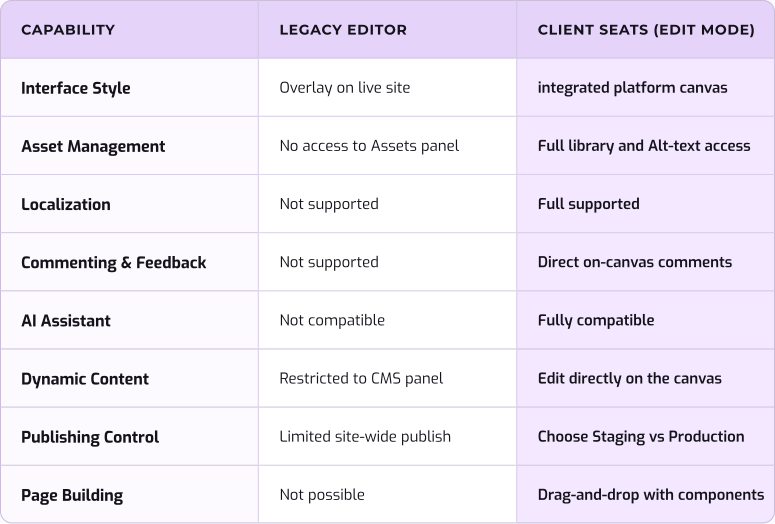
The legacy Editor was essentially a simplified interface that lived as an overlay on top of your live website. While it was intuitive, it created several technical hurdles. Because it was rendered over the live site, it often conflicted with custom code, complex animations, and modern scripts. It also lacked support for Webflow’s newest and most powerful features. This caused a disconnect where the editing experience did not always match the high-performance reality of the published site.
The new Edit mode is integrated directly into the core Webflow platform. This architectural shift solves several long-standing pain points. For the first time, editors have access to the Assets panel. This allows you to manage your own media library, organize files into folders, and update SEO Alt-text directly. Furthermore, the new system is fully compatible with Webflow Localization. This means you can switch between different language versions of your site and manage translations without leaving the canvas. Unlike the legacy system, Client Seats also support real-time collaboration, so you can see exactly who else is working on a page and avoid the frustration of overwriting someone else's work.
What changes for Webflow Agencies like REV365
This shift improves collaboration speed. We can now invite you to the project during the initial build to populate the CMS, drastically reducing time-to-launch. While whitelabeling is being replaced by verified accounts for better security, we provide up to three free Client Seats per project to keep your costs down.
Get started
To get started, we recommend our clients review the Quick Guides from Webflow University regarding these new roles (linked above in the Roles section) and complete the following training courses:
Since Content Editor is the role assigned by default, here are some quick videos to help you get started right now: